Under the supervision of Wilfrid Adjimoti, Country Representative of YPARD Benin and coordinator of the project, the participants were introduced to key aspects of mushroom cultivation: from substrate preparation and inoculation to hygiene and contamination control, sustainable forest-resource management, and proper harvesting techniques. The practical, hands-on format ensured that each woman gained not only theoretical knowledge but also direct experience in mushroom farming methods.
At the conclusion of the training, each participant received a complete “starter kit”: ready-to-use substrate bags, mushroom spawn, a sprayer, protective equipment, and the essential tools to launch their own mushroom production at home.
To support longer-term success beyond the training, YPARD Benin also set up a follow-up and support mechanism. This will help beneficiaries to properly use their kits, navigate their first production cycles, and establish mushroom cultivation as a viable, sustainable livelihood. The women, for their part, expressed heartfelt gratitude for the opportunity, pledging to make full use of the materials and training to improve their household incomes and livelihoods.
YPARD Benin extends sincere thanks to Migration Youth Climate Platform (MYCP) for its financial support, as well as to local authorities and technical partners whose contributions were essential to ensure the success of this first training session.
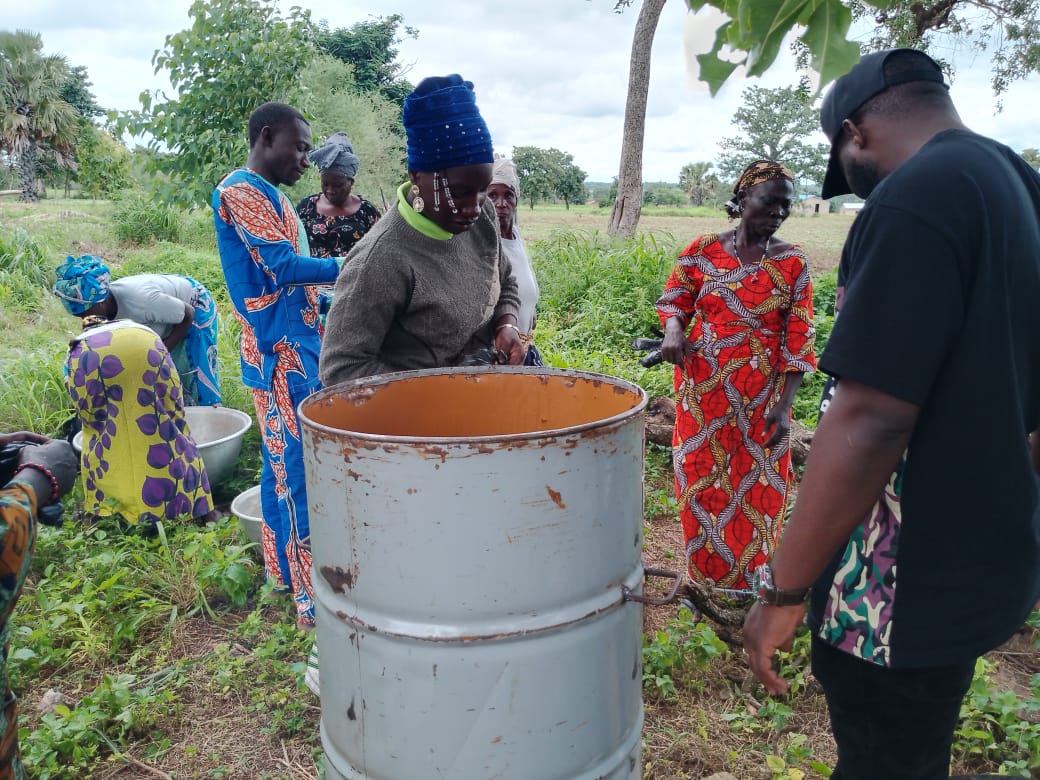
The “Fungi for Her Freedom” project reflects YPARD’s deep conviction that inclusive, innovative and locally grounded agriculture can become a powerful force for social transformation. Mushroom farming was selected for this initiative because of its pronounced advantages for rural women in low-resource settings.
Unlike many conventional cash or food crops, mushrooms require minimal land, making them especially suitable for women who often lack secure access to farmland. The cultivation can take place in small spaces — even a home garden or a modest shed and can thrive using agricultural residues (e.g., rice straw, corn stalks, millet husks), which helps to reduce waste and environmental degradation.
Moreover, mushrooms grow quickly: production cycles can be as short as two to three weeks, which allows for relatively rapid income generation compared to many traditional crops.
From the perspectives of nutrition, food security, and economic opportunity, mushrooms offer significant value. They provide essential nutrients and create a pathway for women, especially those impacted by climate change, displacement, or socio-economic vulnerability, to generate stable income and gain greater autonomy.
The training in N’Dali marks only the beginning of what YPARD Benin hopes will become a longer-term, scalable model of empowerment. Through ongoing mentorship, technical guidance, and resource support, the project aims to ensure that the trainees not only complete their first production cycles but also build sustainable micro-enterprises.
There is potential for further growth: the mushroom harvests could serve local markets or supply institutions such as schools thereby contributing not only to household income but also to food security and nutrition in the wider community. This dual benefit, economic and nutritional, makes mushroom cultivation a promising component of rural development.
Moreover, by fostering cooperative work among women (group production, shared knowledge, cooperatives), the project can strengthen social bonds and build a foundation for collective entrepreneurship, improved market access, and greater resilience.
The “Fungi for Her Freedom” project illustrates how a simple, low-cost agricultural technique like mushroom cultivation can be a powerful catalyst for change. With the support of YPARD Benin, MYCP, technical partners, and local authorities, this initiative could become a model for rural development across Benin and beyond, showing how sustainable agriculture, gender justice, and climate resilience can go hand in hand.
As the project unfolds, it will be inspiring to see how mushroom by mushroom, lives are transformed — in homes, households, and whole communities.
---
References:
[1] YPARD Benin launches “Fungi for Her Freedom” project to empower rural women communities | YPARD
[2] YPARD Benin’s ‘Fungi for Her Freedom’ Selected for MYCP Igniting Impact Micro-Grants Program | YPARD
[3] Thriving edible mushroom cultivation| Darwin Initiative